Are shatter-proof training cups safer than glass or hard plastic cups for toddlers?
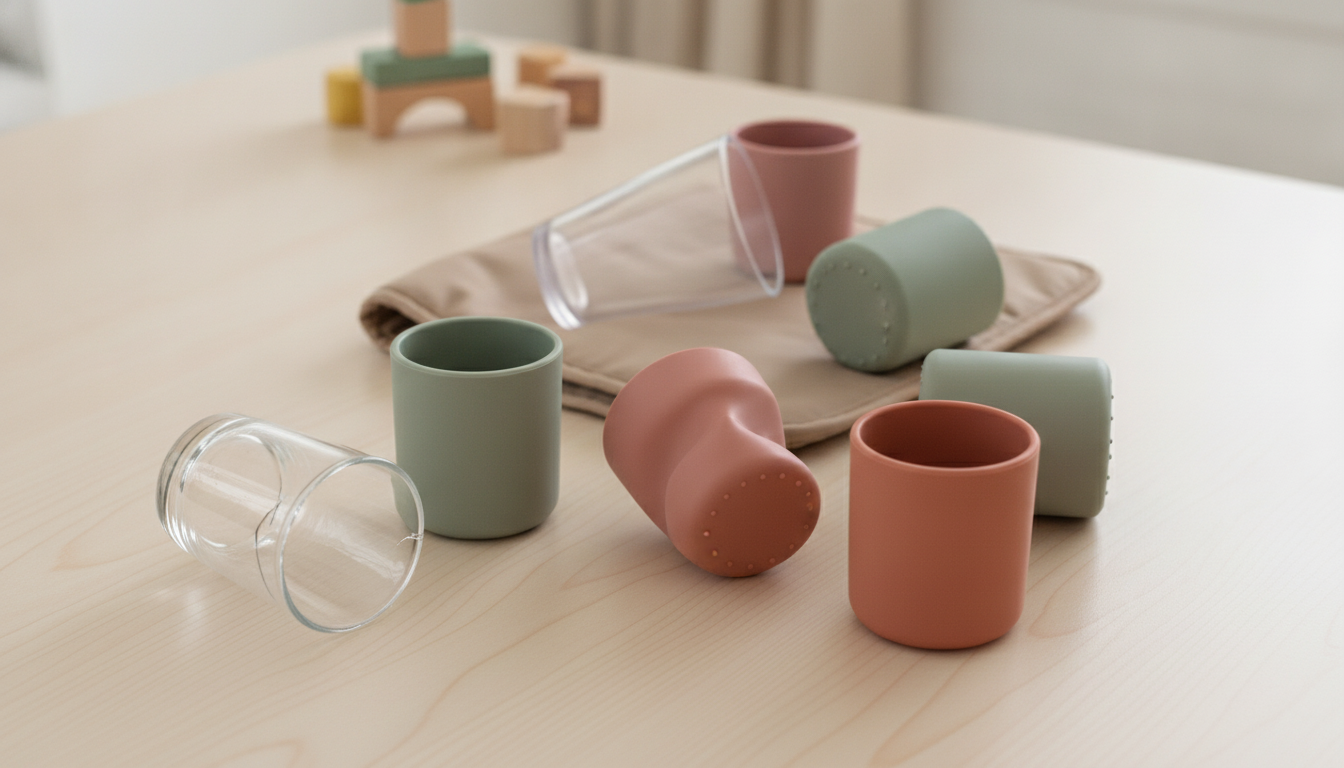
In most everyday toddler scenarios, shatter-proof training cups are generally safer than glass and many hard plastic cups because they’re designed to reduce two common hazards at once: sharp breakage and painful impacts from drops. Toddlers are still developing grip strength and coordination, so frequent tumbles off high chairs and countertops are normal. A cup that won’t shatter helps prevent cuts and scattered fragments that can be hard to fully clean up.
Why shatter-proof cups can be a safer choice
Compared with glass, shatter-proof cups lower the risk of lacerations and choking hazards caused by broken pieces. Compared with hard plastic, many shatter-proof options (often silicone or purpose-built, impact-resistant materials) can be softer on gums and emerging teeth, and less likely to crack into jagged edges after repeated drops. They also tend to be lighter, which reduces the force of accidental bonks to a toddler’s mouth or face.
What “safer” depends on: material and design
Not all “shatter-proof” cups are equal. Safety comes down to what the cup is made of and how it’s built. Look for cups labeled BPA-free, phthalate-free, and designed for food contact. Prefer cups with minimal parts, smooth seams, and a stable base. If the cup includes a lid or straw, ensure the pieces are sturdy, appropriately sized, and hard for a child to pull apart and chew.
When glass or hard plastic may still be used
Glass can work under close supervision for older toddlers who reliably place cups down gently, but it’s typically best kept for adult-handled use. Hard plastic can be practical, but inspect it frequently: replace cups that show deep scratches, clouding, cracks, or warped areas, which can trap bacteria and weaken the structure.
Bottom line
For most toddlers, a well-made shatter-proof training cup is the safer everyday option, especially during the messy, drop-heavy learning phase. For a deeper comparison of common cup materials and what to check before buying, visit this guide on shatter-proof training cups for toddlers.
FAQ
What features should a safe toddler training cup have?
Choose a cup with food-grade materials (clearly labeled), a simple design that’s easy to clean, and parts that can’t be easily pulled off and chewed. A stable base, smooth edges, and dishwasher-safe construction also help support safer daily use.
Recommended for you









Leave a comment