Are there different types of double dog leads?
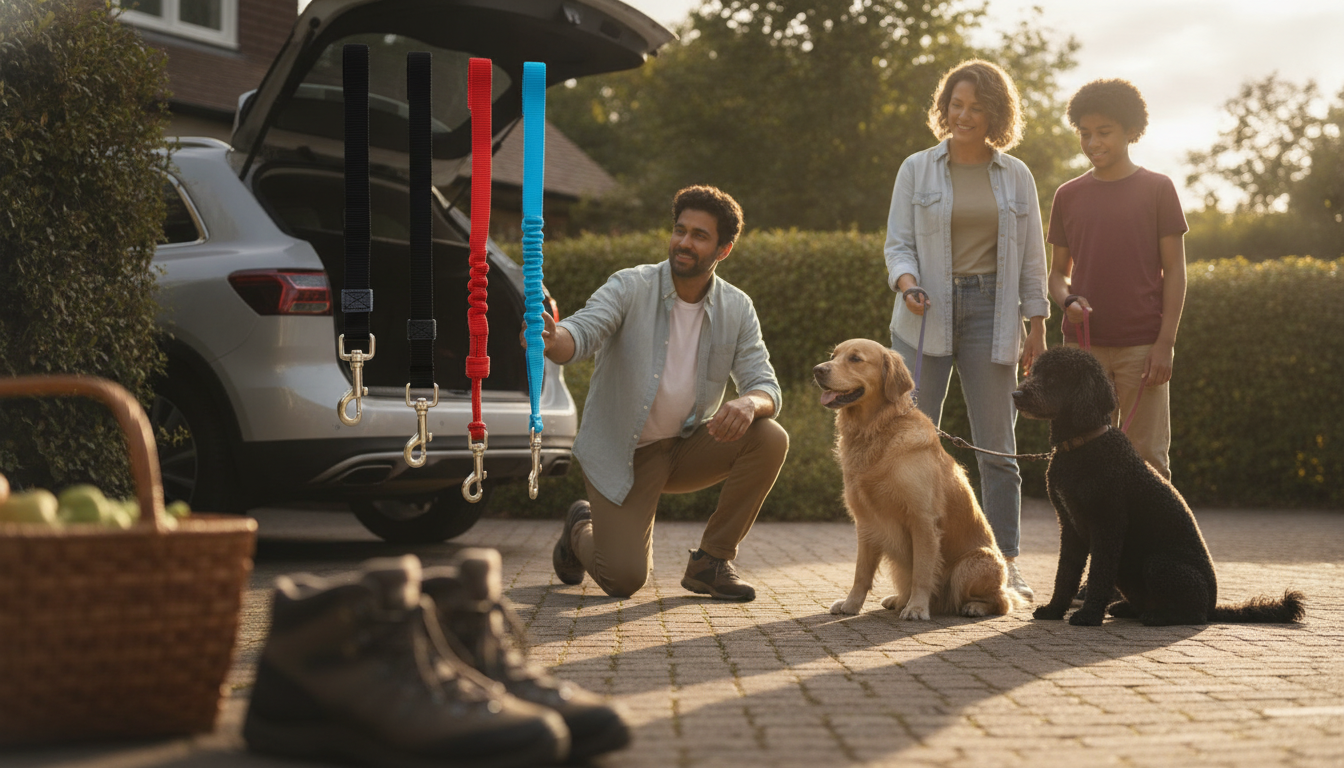
Yes. “Double dog lead” is an umbrella term for any leash setup that lets one handler walk two dogs at once, and there are several distinct styles designed to solve different problems—tangling, pulling, size mismatches, and comfort in your hand.
1) Coupler (Y-shaped) double lead
A coupler clips to both dogs’ collars or harnesses and merges into a single attachment point for your main leash. This is the classic option for dogs that walk at a similar pace, since it keeps them side-by-side. Many couplers include a swivel to reduce twisting and come in different lengths to control spacing.
2) Leash with an integrated splitter
Some double dog leads are one-piece designs: one handle, two branches. These often add features like a padded handle, reflective stitching, and multiple rings for clipping accessories. They’re convenient because there’s no extra connector piece to misplace.
3) Adjustable-length double leads
If one dog prefers a little more room, adjustable arms help. Sliding buckles or multiple D-rings let you shorten one side and lengthen the other, which can prevent one dog from constantly drifting into the other’s path.
4) Hands-free double lead systems
These pair a waist belt with a dual attachment (either two separate bungees or a splitter). They’re popular for jogging or hiking because they distribute pulling force across your hips instead of your wrist. Look for independent swivel points so each dog can change sides without turning the whole belt.
5) Bungee/shock-absorbing double leads
Bungee sections reduce the “snap” of sudden lunges. They can make walks more comfortable if one or both dogs are reactive, strong, or prone to quick stops and starts. They’re also helpful when walking two dogs of different strength levels.
For a deeper breakdown of styles, materials, and when to choose each setup, visit the full guide on double dog lead types.
FAQ
Should you use a harness with a double dog lead?
A harness is often a better match than a collar because it spreads pressure across the chest and shoulders, especially if either dog pulls. For the most control, use a front-clip harness or a well-fitted back-clip harness with a no-tangle coupler.
Recommended for you








Leave a comment