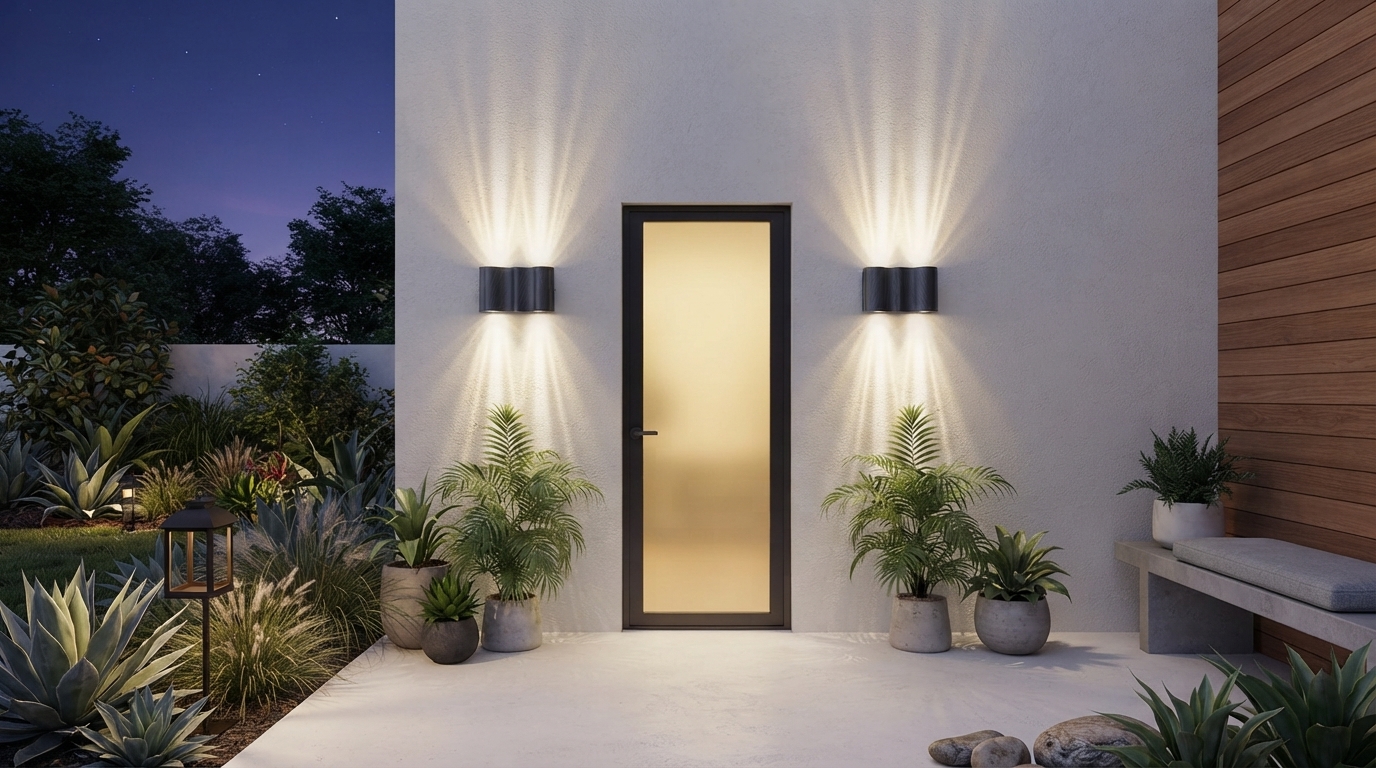
A well-placed wall light can change how an entryway, patio, or garage feels after dark—adding visibility, a sense of security, and a crisp architectural finish. A modern LED outdoor wall light keeps the look simple while delivering practical illumination where it matters most. Below are the key design cues to look for, the best places to install wall lights, and how to choose brightness, color, and beam direction so the lighting feels intentional instead of accidental. For more guidance, see XZM Outdoor Wall Light,LED Square Up&Down Porch Lights 3000K ….
What Makes an Outdoor Wall Light “Modern”
- Simple geometry: Clean rectangles, cylinders, and slim profiles pair well with contemporary siding, brick, stucco, and metal trim without competing with the architecture.
- Purposeful light output: Instead of ornate patterns, modern fixtures focus on even, usable illumination—often up/down, down-only, or softly diffused.
- LED advantages: LEDs turn on instantly, use less energy than many legacy bulb types, and typically last longer. For a helpful overview of LED efficiency and longevity, see the U.S. Department of Energy’s LED lighting guide.
- Contemporary finishes: Matte black and charcoal create bold contrast; brushed-metal looks feel sleek and architectural; crisp white can blend into lighter façades for a quieter, gallery-like effect.
Where It Works Best Around the Home
- Front door and porch: Reduces fumbling with keys and makes faces easier to see at the threshold—especially when the light is aimed down toward the landing.
- Garage exterior and driveway edge: Helps with navigation when pulling in, unloading, or walking around vehicles; also reduces trip hazards near steps and uneven concrete.
- Side yard gates and pathways: Adds guidance without needing tall posts—useful for narrow side yards and utility runs.
- Patio and backyard walls: Supports evening seating areas and shows off outdoor textures like stone, wood, or stucco without requiring bright overhead lighting.
- Apartment balconies or exterior corridors (where permitted): Provides a tidy look while keeping the space functional after sunset.
Sizing and Placement That Looks Intentional
Modern lighting looks best when it feels “built-in” to the home’s proportions. Getting scale and height right prevents the fixture from looking undersized (a common issue on wide garage walls) or uncomfortably glaring at eye level. For further reading, see Outdoor Wall Lights Modern Led Wall Sconce 31″ Gold LED Outdoor ….
Quick Placement Checklist
| Area |
Goal |
Placement Tip |
| Front door |
Clear entry and welcoming light |
Mount near eye level; consider a pair for double doors |
| Garage |
Safer arrival and unloading |
Place near corners or between bays to reduce shadows |
| Steps/walkway |
Reduce trip hazards |
Favor downlight and avoid harsh glare across the path |
| Patio wall |
Comfortable ambient light |
Place outside main sightlines to prevent glare when seated |
Brightness, Color, and Beam Direction
- Brightness: Match output to the task. Driveways, steps, and garages typically need more usable light than patios or accent areas, where softer illumination feels more comfortable.
- Color temperature: Warm white (often 2700–3000K) reads inviting and residential. Neutral to cooler tones can look sharper on modern exteriors, especially with darker finishes and crisp lines.
- Beam style: Downlight is practical and helps reduce glare; up/down adds architectural drama on vertical surfaces; diffused output creates gentle ambient glow for lounging areas.
- Uniformity: Even distribution is usually more comfortable than intense hotspots, and it can improve visibility by reducing harsh contrast.
- Dark-sky awareness: If light spill is a concern, choose designs that minimize upward output and direct light where it’s needed. The International Dark-Sky Association’s outdoor lighting principles offer practical guidance.
Outdoor Ratings and Durability Basics
Wiring, Controls, and Everyday Convenience
- Wall switch control: The simplest setup. If dimming is supported, pair it with a compatible dimmer for softer evening light.
- Photocell (dusk-to-dawn): Keeps lighting consistent every night without remembering to flip a switch.
- Motion sensing: Great for side yards, gates, and garages—light appears when needed and stays off the rest of the time.
- Smart control: Useful for schedules and remote toggling; confirm compatibility with the fixture and the existing wall box wiring.
- Installation: Follow local electrical codes and consider professional help for new exterior runs or uncertain wiring. For code context, the NFPA’s National Electrical Code (NEC) overview is a solid reference point.
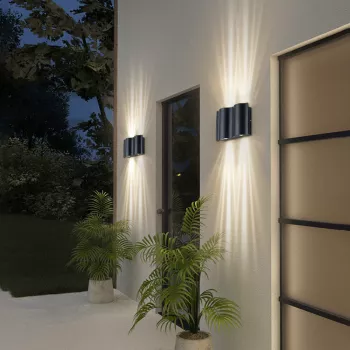
For a clean, contemporary update, the Modern LED Outdoor Wall Light is a streamlined option for entryways, patios, and perimeter walls. It’s a practical swap for older fixtures when the goal is a more modern silhouette and the everyday efficiency of LED lighting. If you’re planning a multi-fixture refresh, confirm current pricing and availability first so all visible exterior lights match.
Also Useful for Outdoor Comfort
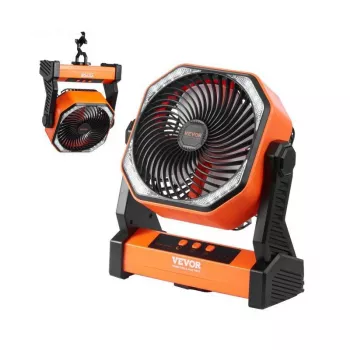
For patios, camping setups, or power-outage prep, a portable light source can complement fixed wall lighting. The Portable Rechargeable Fan with LED Light – Battery Operated for Home & Travel adds flexible illumination where hardwired fixtures aren’t possible.
Care and Maintenance
FAQ
What height should an outdoor wall light be mounted?
A practical target is about 60–66 inches from the ground to the fixture’s centerline, then adjust based on door height, steps, and sightlines. For paired lights, match heights precisely to keep the entry looking symmetrical.
Is an outdoor LED wall light bright enough for a front door or garage?
Yes—when the lumen output and beam direction fit the space. Garages and steps typically need brighter, more task-focused downlighting, while patios and seating areas feel better with softer, more diffused light that avoids glare and dark spots.
What outdoor rating should a wall light have for rain exposure?
For fully exposed locations, choose a wet-location rated fixture; covered areas may allow damp-location fixtures depending on exposure. Always check the fixture’s label and follow local electrical requirements.
Recommended for you










Leave a comment