Wooden Balance Beam Stepping Stones for Kids: Montessori-Inspired Movement Play for Toddlers
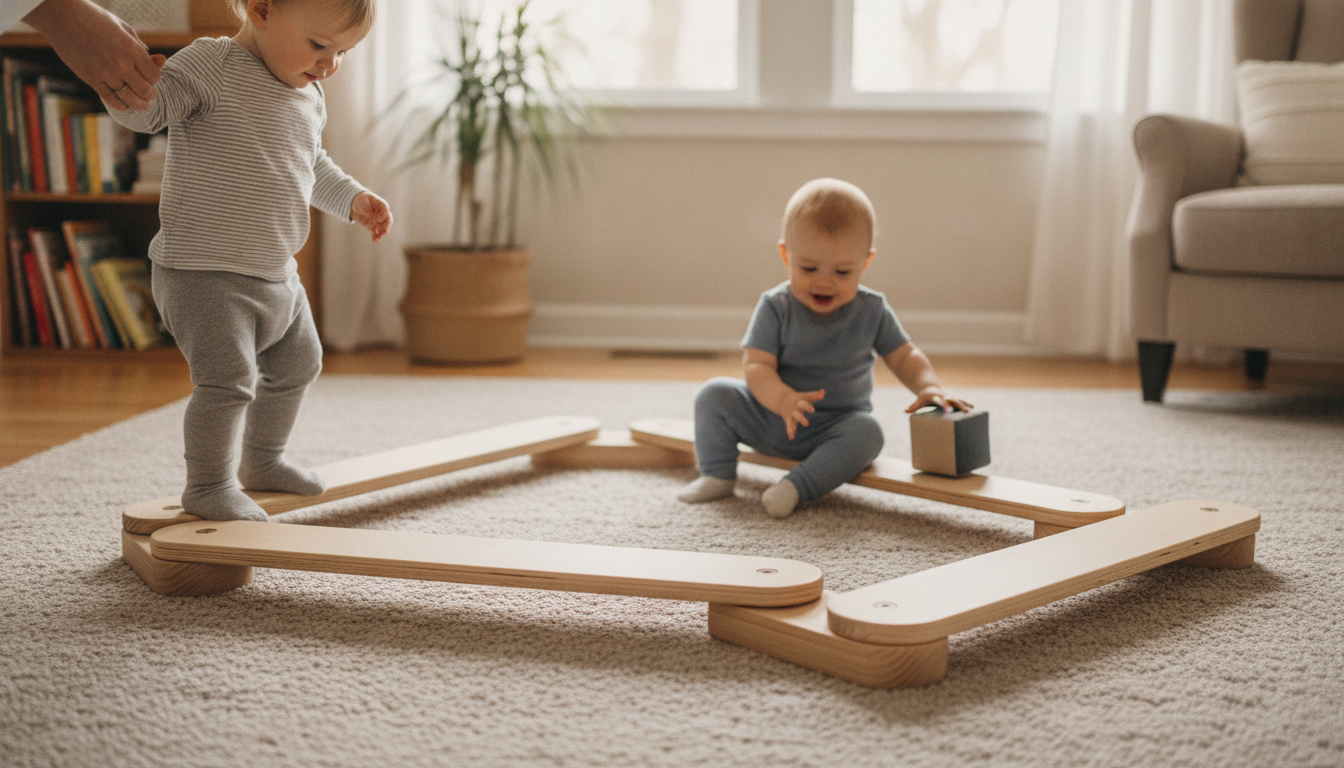
Wooden balance beams and stepping stones turn everyday floor space into a safe, engaging path for toddlers to practice balance, coordination, and confident movement. Designed for open-ended play, Montessori-inspired sets encourage kids to explore at their own pace while building foundational gross motor skills through simple, repeatable challenges.
What This Play Set Includes and How It Works
A toddler balance path is all about simple pieces that can be rearranged again and again. Instead of a single “right way” to play, children can build routes that match their comfort level—then adjust as they gain steadiness.
- Modular pieces that can be arranged into straight lines, curves, zigzags, and obstacle paths
- Stepping-stone style platforms that help toddlers learn foot placement and weight shifting
- Low-to-the-ground design supports early balance practice with less fear of heights
- Open-ended setups encourage independent exploration and repeated attempts
Common Setups to Try at Home
| Setup idea |
Best for |
How to make it easier |
How to make it harder |
| Straight path |
First-time walkers and cautious toddlers |
Place pieces close together; allow hand-holding |
Increase gaps; add a turn at the end |
| Zigzag trail |
Coordination and directional changes |
Use wide angles; slow pace |
Tighten angles; ask for heel-to-toe steps |
| Island hops |
Jumping/stepping control |
Keep platforms near; step instead of hop |
Increase spacing; alternate feet only |
| Follow-the-leader course |
Turn-taking and listening |
Short course; one rule |
Add rules (pause, tiptoe, reverse) |
Skills Toddlers Build Through Balance Paths
A balance beam and stepping stones set supports the everyday movement skills toddlers use for play, self-care, and safe exploration. Many families notice that a short daily “path” session helps kids settle into their bodies—especially when energy runs high.
- Gross motor development: stepping, stopping, turning, and controlled movement
- Core strength and posture: stabilizing the trunk while shifting weight
- Proprioception and body awareness: understanding where feet and legs are in space
- Bilateral coordination: using both sides of the body smoothly
- Focus and perseverance: repeating a path until it feels “just right”
For a helpful snapshot of typical movement progress around age two, visit the CDC’s developmental milestones. For more ideas on active play for toddlers, see guidance from HealthyChildren.org (American Academy of Pediatrics).
Montessori-Aligned Ways to Use It
Montessori-inspired movement play works best when the environment invites practice without pressure. A balance path can be a quiet, repeatable “work” toddlers return to—especially when it’s easy to access and not treated as a performance.
- Keep the course accessible and ready for child-led practice rather than adult-directed drills
- Offer one small challenge at a time (a turn, a gap, a new rule) and then step back
- Use simple language: “slow feet,” “stop,” “turn,” “step,” “wait”
- Let toddlers reset the pieces to support independence and problem-solving
- Rotate configurations instead of adding extra toys—new layouts renew interest
If your child wants to repeat the exact same route, that’s often where confidence and refinement grow. If they want to redesign it every time, that’s planning and spatial problem-solving at work.
Safety Tips and Where to Set It Up
Balance play should feel like a safe challenge, not a scary one. A few small setup habits make a big difference—especially for new walkers and toddlers who are still learning how to stop quickly.
- Place on a flat surface; avoid uneven rugs that can shift underfoot
- Use a soft play mat nearby for early learners who may step off suddenly
- Supervise toddlers, especially during first sessions and when increasing gaps
- Check for smooth finishes and stable contact with the floor before play
- Create a clear perimeter free of hard furniture edges and sharp corners
To keep the space calmer and more predictable, many families set a simple boundary: “Feet go on the wood pieces or on the floor—no climbing furniture during the course.”
How to Choose the Right Balance Beam and Stepping Stones Set
Quick Buying Checklist
| Consideration |
What to look for |
Why it matters |
| Stability |
Wide base and secure floor contact |
Helps prevent unexpected shifting |
| Edge design |
Rounded corners, smooth sanding |
Reduces scrapes and snags |
| Modularity |
Multiple pieces, flexible layout |
Keeps play fresh as skills grow |
| Cleaning |
Wipeable surface |
Supports everyday use |
Featured Option: Wooden Balance Beam Stepping Stones for Kids
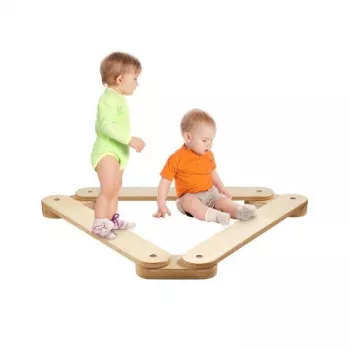
If you’re looking for an easy-to-set-up indoor movement staple, Wooden Balance Beam Stepping Stones for Kids – Montessori Toy for Toddlers offers a modular wooden path designed for toddler-friendly balance practice. It fits nicely into obstacle courses, calm movement breaks, and simple stepping games that build coordination over time.
At-a-Glance Details
Helpful Add-Ons for a Cozy Indoor Play Space
FAQ
How much does a balance beam cost?
Indoor toddler balance beam and stepping stone sets commonly range from about $30 to $120, depending on materials, piece count, and modular features. Gymnastics-style beams (taller, longer, and competition-inspired) typically cost more due to size and construction.
What wood are balance beams made of?
Many balance beams are made from solid wood or layered wood/engineered panels designed for strength and stability. The most important factors are smooth sanding, rounded edges, and a sealed, wipeable finish made with child-appropriate materials.
Are balance beams good for toddlers?
Yes—low-to-the-ground balance beams can support balance, coordination, and confidence through repeatable stepping practice. Choose a toddler-friendly height, start with short distances and small gaps, and supervise while your child learns the course.
Recommended for you








Leave a comment