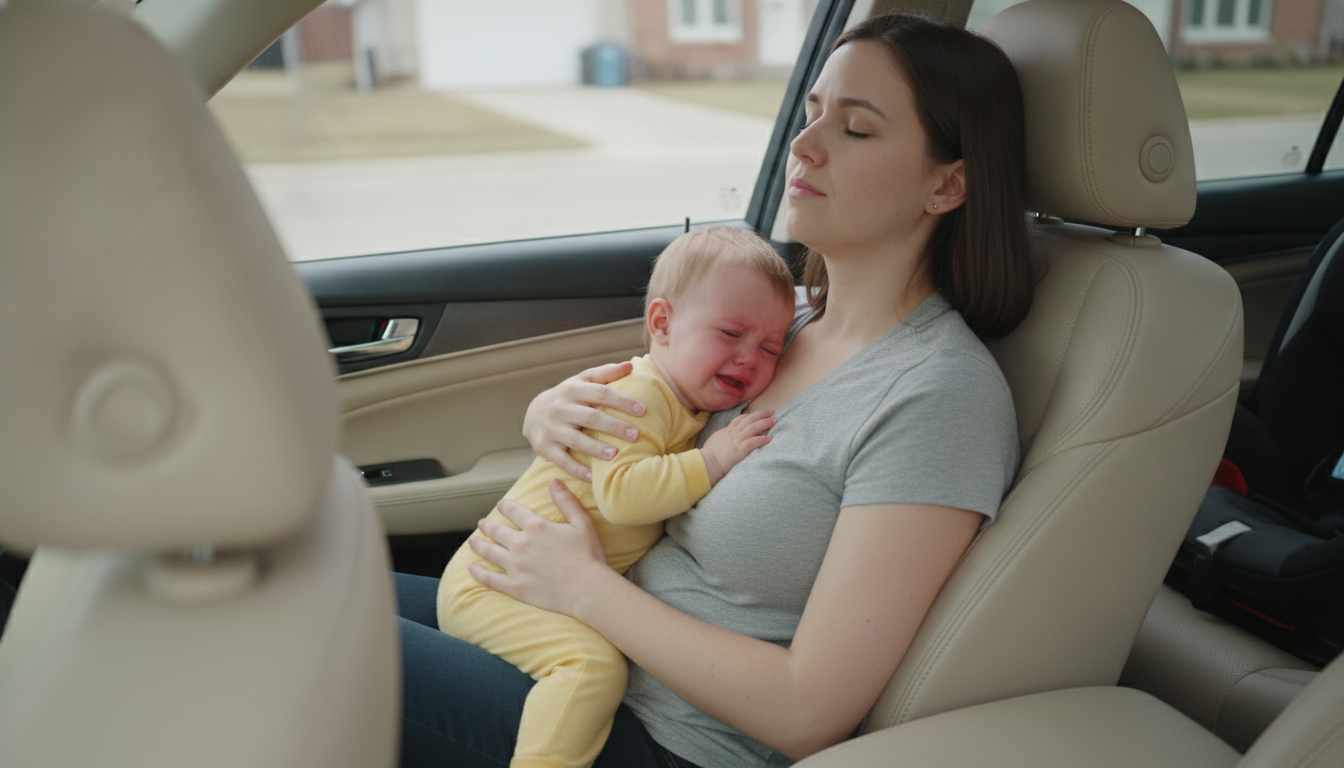
How can I do a quick breathing exercise while holding a crying child?
Answer
Keep the goal simple: lower your own stress fast while staying physically supportive. Start by adjusting your hold so you’re stable—feet hip-width apart, knees soft, shoulders down, child close to your chest. If it’s safe, rest their head on your shoulder so you can relax your neck and jaw.
Try this 30–60 second “exhale-led” breathing drill, designed for moments when you can’t put the child down:
1) Long exhale first (2 breaths). Breathe out slowly through pursed lips, like cooling soup, for about 6–8 seconds. Let the inhale happen quietly through your nose for 3–4 seconds. Repeat once.
2) Box-lite breathing (3 rounds). Inhale through your nose for a count of 3, hold for 2, exhale for 4, hold for 1. Keep it gentle—no straining. If holding feels stressful, skip the holds and simply do 3-in/4-out.
3) Add a grounding cue. On each exhale, silently say a short phrase like “soften” or “safe.” Pair it with one physical release: unclench your tongue from the roof of your mouth, drop your shoulders, or loosen your fingers.
If the crying is intense, match your movement to your breath: sway or pace on the exhale and pause for a beat at the end of the exhale. Many kids settle faster when your body rhythm becomes slower and more predictable.
For a longer walkthrough and additional calming options that fit real-life parenting moments, see the main guide: How can I do a quick breathing exercise while holding a crying child?.
FAQ
What if I start feeling panicky while my child is crying?
Prioritize safety first: place the child in a safe spot like a crib if you’re close to losing control, then take 5–10 slow exhales. If you can’t set them down, keep breathing out longer than you breathe in and focus on relaxing your jaw and shoulders to reduce the panic surge.
Recommended for you












Leave a comment