Do all USB-C cables support 3A?
No. Even though many USB-C cables can handle 3A charging, the USB-C connector alone doesn’t guarantee a 3A rating. A cable’s current capacity depends on how it’s built (wire gauge, shielding, connector quality) and how it’s certified or labeled by the manufacturer.
Why some USB-C cables are limited to less than 3A
Some USB-C cables are designed primarily for data, basic charging, or legacy USB power levels. Thinner conductors and lower-quality construction can cause more resistance, heat, and voltage drop, so manufacturers may rate them for lower current to stay safe and stable. In practice, a low-rated cable may charge slower, run warmer, or lead to inconsistent charging behavior.
What “3A support” really means
A 3A-capable USB-C cable should reliably carry up to 3 amps without excessive heating or performance issues. For USB Power Delivery (USB-PD), many common charging profiles (like 60W at 20V/3A) assume a cable that can sustain 3A. If a cable can’t, the charger and device may fall back to a lower power level.
How to tell if a USB-C cable supports 3A
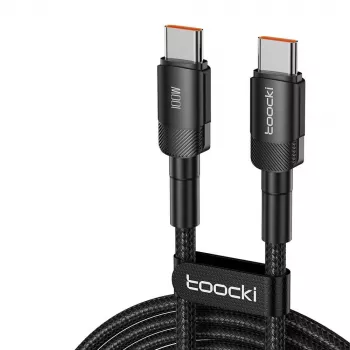
Check the product listing or cable jacket printing for explicit ratings such as “3A,” “60W,” or “USB-PD.” Reputable cables often state their max wattage or current. If you’re shopping for higher-power charging, look for clear specs rather than relying on “fast charge” marketing language. For a deeper breakdown of cable ratings (including 5A/100W cables), see this 100W USB-C to USB-C cable guide.
When 3A isn’t enough
If you need 100W charging (20V/5A) for laptops and other high-draw devices, a standard 3A cable won’t deliver full power. Those setups require a 5A-rated USB-C cable (typically with an e-marker chip) so the charger and device can safely negotiate higher current.
FAQ
How do I know if my USB-C cable is 5A (100W) rated?
Look for “5A,” “100W,” or “E-Marked” in the specs or on the cable’s packaging. Without a clear 5A rating, assume it’s a 3A cable and that it may top out around 60W under USB-PD.
Recommended for you











Leave a comment