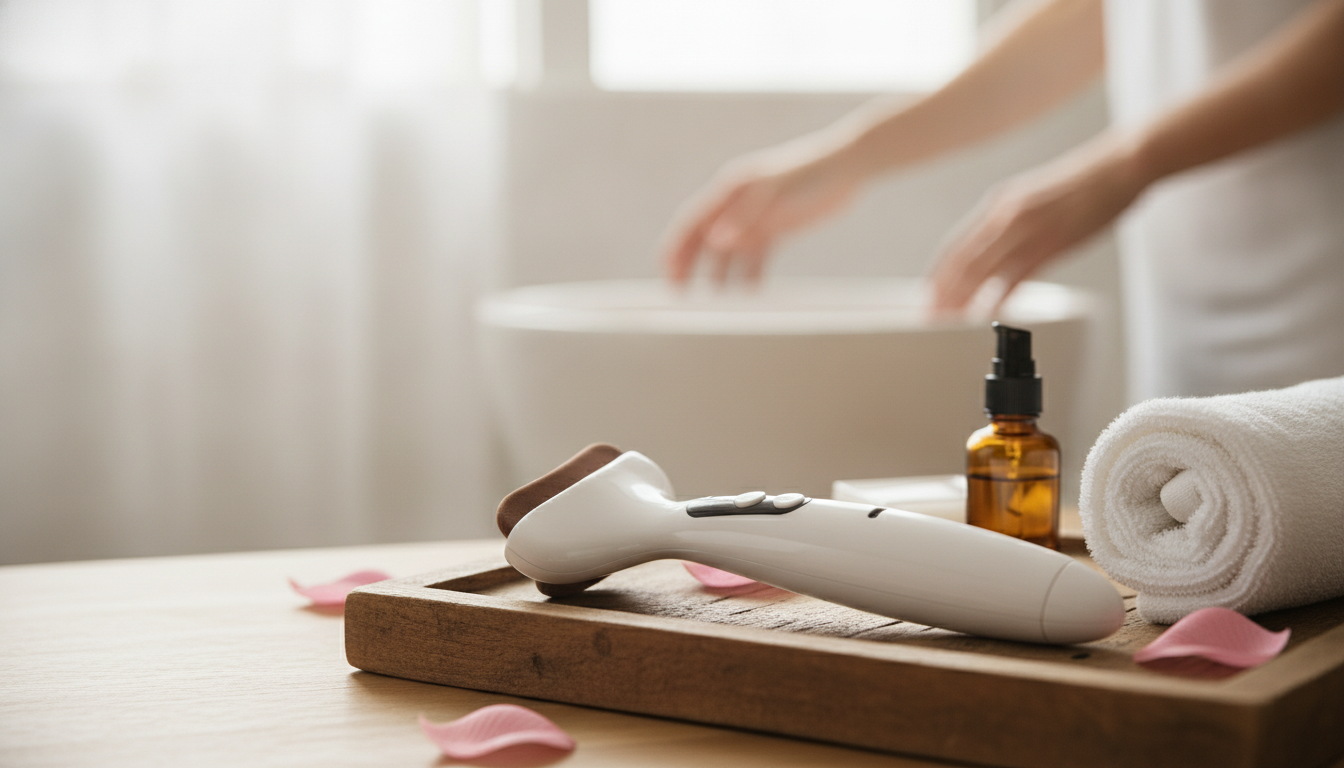
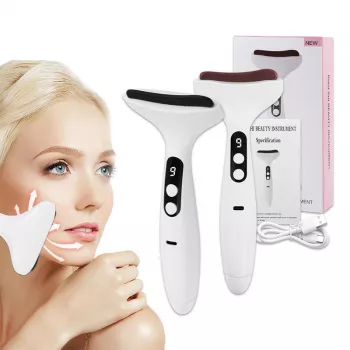
A heated scraping massage tool brings gentle warmth to classic gua sha-style strokes, helping it glide more comfortably while supporting a relaxing routine for the face, neck, shoulders, and body. When paired with a little oil or lotion, the smooth edge can feel soothing on tight, overworked areas—especially after long screen time, travel, or workouts. Below is what it’s designed to do, how to use it safely, when to avoid it, and how to keep it clean for daily or weekly self-care.
What a heated scraping massage tool is designed to do
At its core, a heated gua sha scraping tool combines two simple ideas: a smooth-edged massage surface and mild, controlled warmth. The goal isn’t to “scrape hard,” but to encourage slow, consistent strokes that feel comfortable on skin and muscles.
- Combines smooth-edge scraping massage with mild heat for a more comfortable glide.
- Supports relaxation of tight-feeling areas in the jaw, neck, shoulders, and calves.
- Can be used with facial oil or body lotion to reduce tugging and improve slip.
- Useful for quick self-care sessions at a desk, after workouts, or before bed.
Many people also enjoy these tools as part of a wind-down routine, similar to other gentle massage approaches that emphasize light pressure and consistent direction. For general massage guidance and safety considerations, the National Center for Complementary and Integrative Health (NCCIH) offers a helpful overview of massage therapy basics.
Key benefits of adding warmth to gua sha-style massage
Warmth can change the experience of gua sha-style strokes in a few practical ways. Instead of trying to “power through” stiffness, heat encourages a slower pace and a lighter hand—often the difference between a calming ritual and an irritating one.
- Warmth can help soften the feel of stiff or tight areas before scraping strokes.
- May feel more soothing than a room-temperature tool, especially in cooler seasons.
- Encourages slower, more controlled technique rather than pressing too hard.
- Pairs well with short breathwork routines for a calming wind-down.
If you like the idea of gentle facial massage and relaxation-focused technique, you may also appreciate reading about lymphatic-style massage concepts from the Cleveland Clinic (especially the emphasis on light pressure and comfort).
How to use it: a simple routine (face, neck, shoulders)
Consistency matters more than intensity. Aim for short sessions and a “glide, don’t drag” feel. Always start with clean skin and enough slip.
- Prep: cleanse skin and apply a few drops of facial oil or a light moisturizer for slip.
- Start low: begin with the lowest heat setting and light pressure; avoid dragging on dry skin.
- Face: glide from the center outward (chin to ear, cheek to temple) with slow strokes.
- Under-eye area: use very light pressure; keep strokes outward and short.
- Neck: glide upward along the sides of the neck; avoid direct pressure on the front of the neck/throat.
- Shoulders: use longer strokes from the neck toward the shoulder edge; pause on tight spots without digging.
- Finish: wipe the tool clean and apply a gentle moisturizer if needed.
Quick routine guide (pressure, direction, time)
| Area |
Direction |
Pressure |
Time |
| Jawline |
Chin to ear |
Light to medium |
30–60 seconds per side |
| Cheeks |
Nose/center to temple |
Light |
30–60 seconds per side |
| Brow |
Brow to hairline/temple |
Very light |
20–40 seconds per side |
| Neck (sides) |
Collarbone to jaw |
Light |
30–60 seconds per side |
| Shoulders |
Neck to shoulder edge |
Medium |
60–120 seconds per side |
Body use: legs, arms, and back-of-neck
For body areas, think of the tool as a warm, smooth massage edge. Use enough lotion or oil to keep the strokes even, and keep your pace slow.
- Apply body oil or lotion first; keep strokes slow and even.
- Legs: glide upward from ankle to knee, then knee to thigh; use lighter pressure near bony areas.
- Arms: glide from wrist to elbow, then elbow to shoulder; avoid pressing directly on joints.
- Back-of-neck: keep pressure light and avoid quick scraping over sensitive skin.
- For post-exercise comfort, focus on slow strokes rather than aggressive scraping.
Heat, pressure, and safety: getting results without irritation
For everyday skin barrier basics and general gentle-care tips, the American Academy of Dermatology Association is a trusted resource.
Cleaning and care to keep the tool hygienic
Who it’s best for (and who should skip it)
If you’re ready to try warm scraping massage, the Heated Gua Sha Scraping Massage Tool is designed for comfortable, controlled strokes on both face and body. For best slip, pair it with a facial oil, serum, or body lotion, and keep sessions short and consistent.
More self-care tools to pair with your routine
FAQ
How often can a heated gua sha scraping tool be used?
Most people do well with 3–5 times per week, or daily if sessions are short and very gentle. If you notice sensitivity, lasting redness, or irritation, reduce frequency and pressure/heat.
Is redness after scraping massage normal?
Mild, temporary redness can happen from increased circulation and friction, especially on the cheeks and jawline. Pain, bruising, broken capillaries, or redness that lingers for hours is a sign to stop and use less pressure and lower heat.
Can it be used with retinol or acid-based skincare?
Use caution: keep pressure extra light, prioritize plenty of slip, and consider using the tool on alternate nights from stronger actives. Avoid working over freshly irritated skin, and discontinue if sensitivity increases.
Recommended for you








Leave a comment