What are the different types of balance beams?
Balance beams come in several styles, and the “right” type depends on who’s using it, where it will live, and what skill you want to build—basic stability, coordination, agility, or confidence on elevated surfaces. Below are the most common categories you’ll see for kids and home play spaces.
Floor balance beams (low-profile)
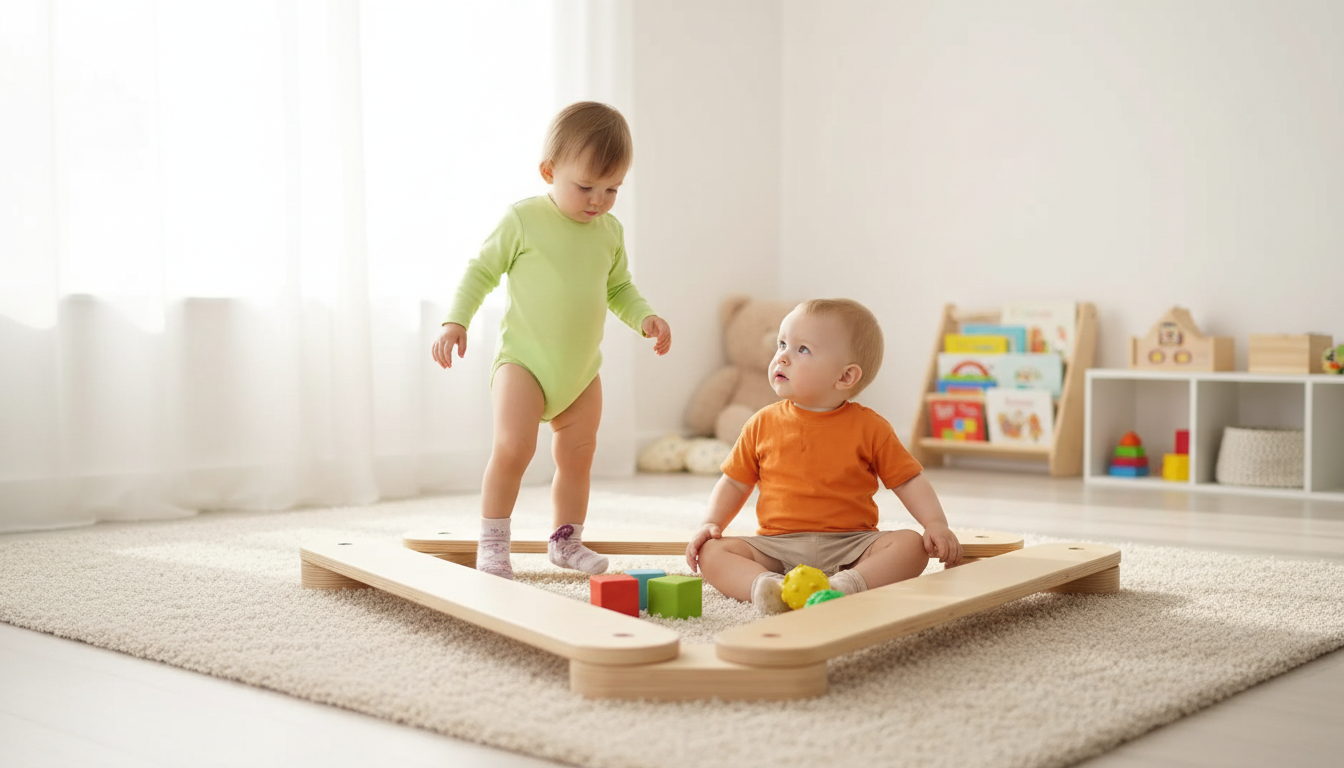
These sit directly on the ground or have a minimal rise, making them a popular choice for toddlers and beginners. Because there’s little to no height, kids can focus on foot placement, posture, and controlled steps without the added fear factor of elevation.
Raised gymnastics balance beams
These are the classic “gym” style beams used in training, typically padded and elevated on legs or supports. They’re designed for older kids and athletes practicing turns, jumps, and routines, and they require more supervision and adequate fall space (like mats) due to the height.
Adjustable-height or modular beams
Some beams can be reconfigured to different heights or connected into longer paths. This flexibility helps a beam grow with a child’s abilities—from simple walking to more advanced challenges like stepping patterns, side-stepping, or obstacle-style sequences.
Wooden Montessori-style balance beams
These beams emphasize natural materials, simple design, and open-ended movement play. They often pair well with stepping stones or other modular components, letting kids create routes that build balance, body awareness, and coordination through self-directed exploration.
Outdoor balance beams
Outdoor versions are built for weather resistance and sturdier surfaces like grass, mulch, or playground areas. They may be fixed (like on a play structure) or portable, and they’re often wider for stability—especially for younger children.
For a closer look at Montessori-style wooden options, setup ideas, and what to consider for toddlers, visit this guide to Montessori wooden balance beams and stepping stones.
FAQ
What age is appropriate for a balance beam?
Many toddlers can start with a floor-level balance beam as soon as they’re steady walkers, typically around ages 1–2. For raised beams, it’s best to wait until a child has strong balance skills and can follow safety rules, often closer to preschool age and up.
Recommended for you










Leave a comment