What can a 2000W portable power station run?
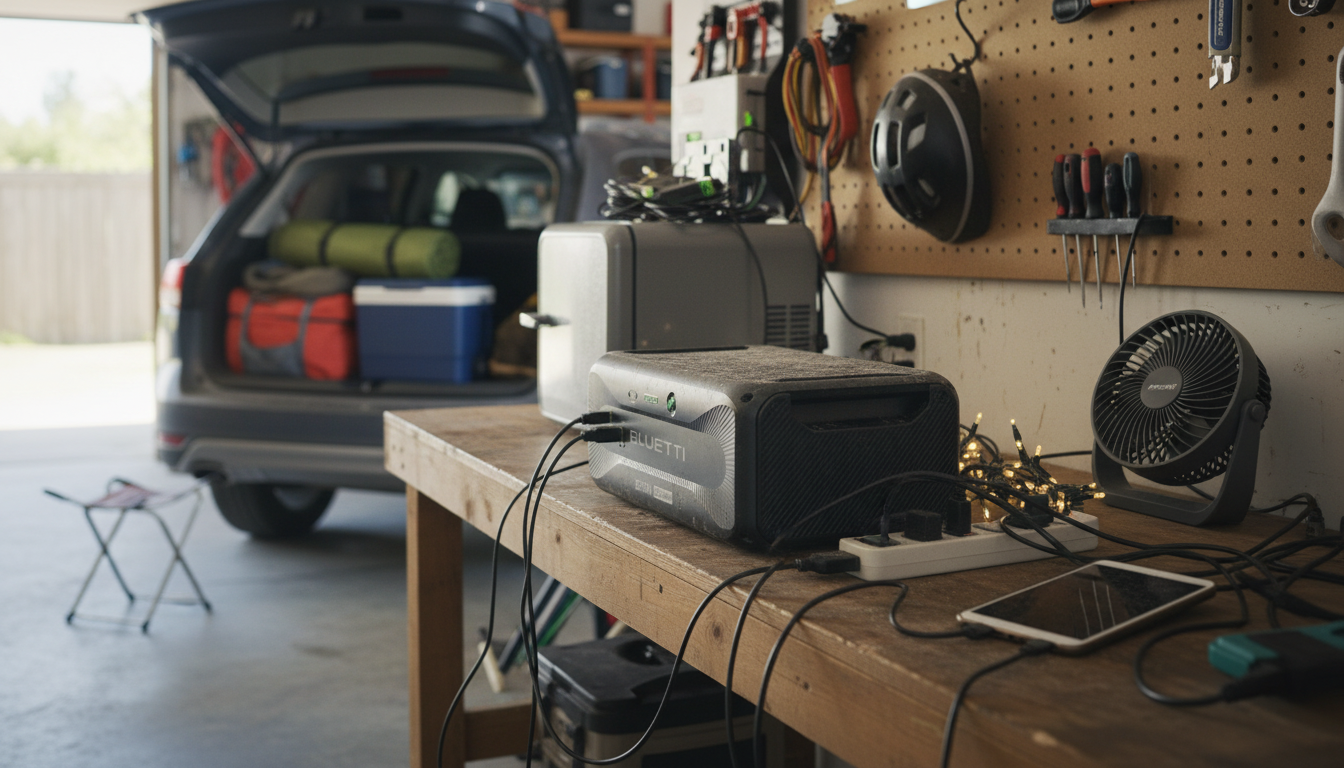
A 2000W portable power station can run most everyday household and jobsite essentials, as long as the total draw of everything plugged in stays at or under about 2000 watts (continuous). Think of 2000W as your “how big of a load” limit; the battery capacity (watt-hours) is the “how long it lasts” limit.
Common items a 2000W power station can usually handle
In real-world use, a 2000W unit is often enough for a small “comfort + convenience” setup:
Kitchen and food: full-size refrigerator (running), mini fridge, blender, rice cooker on low/medium, toaster oven at modest settings, electric kettle (many are 1200–1500W), and many microwaves (often 1000–1500W input). Some high-power appliances can fit, but not all at once.
Home backup essentials: Wi-Fi router/modem, TVs, fans, LED lighting, laptop/phone chargers, aquarium pumps, and medical devices like CPAP machines (check if heated humidifiers increase wattage).
Tools and garage: battery chargers for cordless tool packs, many corded drills and saws under load limits, and smaller air compressors. Motors can have high startup surges, so surge rating matters.
What may trip a 2000W station
High-heat and high-motor loads can exceed 2000W quickly. Space heaters (often 1500W) can run alone, but add anything else and you may overload. Hair dryers, induction cooktops, and portable AC units can be borderline depending on model and startup surge. If an appliance has a resistive heating element, assume it’s a heavy hitter.
How long will it run those devices?
Runtime depends on battery size (Wh), inverter efficiency, and the device’s real draw. For practical run-time math and examples (including larger LiFePO4 and expandable setups), see the detailed guide here: portable power station runtime guide.
FAQ
How do I calculate runtime for my devices?
Divide the power station’s usable watt-hours by your device’s watts (then subtract a bit for inverter losses). Example: a 200W load on ~1000Wh usable capacity is roughly 4–5 hours depending on efficiency.
Recommended for you










Leave a comment