When do you start training a puppy to potty?
Start potty training the day your puppy comes home. Even very young puppies can learn a simple routine: where to go, how to get there, and what happens right after they do it. Waiting a few weeks often creates mixed habits (going wherever feels convenient), which can take longer to undo than starting with a straightforward plan from day one.
What age is “too young” for potty training?
There isn’t a “too young” age for building the basics, but expectations need to match your puppy’s bladder control. Most puppies can’t reliably hold it for long stretches until they’re older, so early training is less about “holding it” and more about prevention and repetition: frequent potty trips, consistent rewards, and close supervision indoors.
What to do on day one
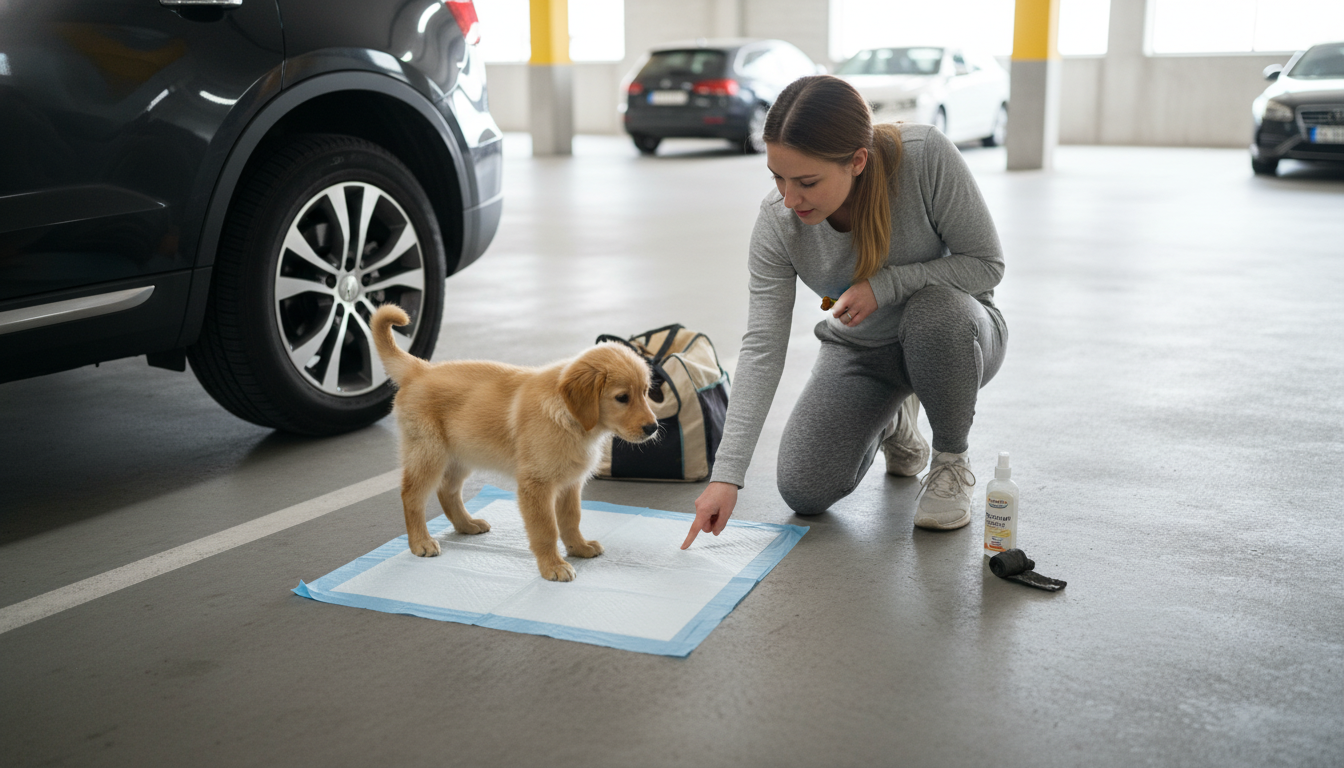
Pick a designated potty spot (outdoors or a pad area) and make it the default. Take your puppy there:
- Immediately after waking up
- After eating or drinking
- After playtime or training sessions
- Before bedtime
- Any time they start sniffing, circling, or wandering away
Use a short cue (“Go potty”), stay boring and patient, then reward within a second or two of finishing. That timing is what helps your puppy connect the action to the reward.
How long can a puppy hold it?
As a rough guideline, many puppies can hold their bladder for about one hour per month of age when awake (with lots of individual variation). Overnight can be longer, but don’t assume it—set alarms if needed, especially in the first week.
Accidents: what they mean (and what to do)
Accidents usually mean the schedule was too loose, supervision was too light, or the potty spot wasn’t made rewarding enough. Interrupt gently if caught in the act, take them to the potty area, and clean indoor spots thoroughly with an enzymatic cleaner so the smell doesn’t invite repeats.
For a step-by-step routine that pairs potty breaks with feeding, crate time, and simple cues, follow this plan: 4-week puppy training plan and potty routine.
FAQ
How does Cesar Millan potty train a puppy?
He emphasizes structure: consistent timing, calm energy, and taking the puppy out frequently—especially after sleep, food, and play—then rewarding the correct location. The core is prevention and repetition rather than punishment.
Is it hard to potty train a puppy in an apartment?
It can be harder because elevator rides and longer hallways add delay, so puppies may not make it in time. A tighter schedule, carrying the puppy to the potty area, and having a backup indoor spot (like a pad) can reduce accidents.
How long does it take to potty train a puppy on pads
Many puppies show noticeable improvement in 2–4 weeks with consistent placement and rewards, but reliability can take 1–3 months depending on age and routine. Mixing pad training with inconsistent locations usually slows progress.
Recommended for you











Leave a comment