Tall Multi-Level Cat Tree with Hammock and Condo for Indoor Cats
A tall cat tower adds vertical territory, lounging spots, and scratch zones without taking over the floor. For larger indoor cats, the details matter—platform sizing, post strength, base stability, and how the condo and hammock are supported—so play and rest feel secure at every level.
What a tall multi-level cat tower adds to an indoor home
- Vertical space helps indoor cats climb, perch, and observe without competing for the same floor area.
- Multiple levels encourage movement throughout the day, especially for cats that nap often but still benefit from brief climbs and stretches.
- A dedicated scratch surface can reduce clawing on sofas, rugs, and door frames by giving cats a better, more rewarding target.
- Separated zones (perch, condo, hammock) create options for confident cats and shy cats in the same household.
Animal welfare groups also emphasize the value of enrichment and choice—especially in indoor spaces. The American Association of Feline Practitioners (AAFP) and International Cat Care both highlight how climbing, hiding, and resting areas can support healthier daily behavior.
Key parts: hammock, condo, perches, and scratch posts
- Hammock: Great for lounging and pressure relief. For big cats, look for wide fabric support, reinforced edges, and sturdy attachment points that don’t twist under load.
- Condo: A covered “safe room” that helps cats decompress. Larger cats need a roomy entrance and interior so they can turn around without crouching or scraping whiskers.
- Top perch: The highest bed should feel stable when a cat shifts weight, kneads, or flops down. Raised edges (bolsters) help cats settle in and feel secure.
- Scratch posts: Thicker posts give better leverage for full-body stretches. Multiple posts reduce bottlenecks if more than one cat wants to scratch at the same time.
- Transitions: Step spacing matters. Platforms that are too far apart force big leaps, which can feel risky for heavier cats or older cats.
Sizing and stability checks for large indoor cats
When a bigger cat launches upward, the entire tower experiences torque. That’s why “tall” is only half the story; the structure underneath determines whether the height feels fun or wobbly.
- Base footprint: A wider base lowers tip risk when a cat jumps onto higher platforms.
- Platform size: Prioritize roomy resting areas so tails and paws aren’t hanging off the edge.
- Post diameter and anchoring: Thick posts and secure fasteners help prevent wobble over time.
- Weight support: Choose a tower designed for heavier cats, especially for hammocks and elevated beds.
- Placement: Set the tower on a flat surface; placing it near a wall can add a feeling of security and reduce side-to-side sway.
Quick checklist for choosing a tall tower for bigger cats
| Feature to check |
Why it matters |
What to look for |
| Base stability |
Reduces tipping and wobble during jumps |
Wide base; snug hardware; minimal sway when pushed |
| Platform room |
More comfortable lounging and turning around |
Large perches; supportive edges; non-slip surface |
| Hammock support |
Prevents sagging and sudden drops |
Reinforced fabric; strong attachment points; firm frame |
| Scratch post strength |
Supports full-body stretches and clawing force |
Thicker posts; tightly wrapped sisal; multiple posts |
| Condo space |
Encourages hiding without feeling cramped |
Wide entrance; adequate interior height and depth |
Setup and care for long-term use
- Assembly: Tighten all bolts fully, then re-check after a few days of use as carpeted surfaces and wood compress slightly.
- Safety: If wall-anchoring straps are included (or can be added), they’re worth using in homes with energetic jumpers, multiple cats, or kids bumping into furniture.
- Cleaning: Vacuum fur from platforms and seams; spot-clean fabric; keep scratch areas dry so sisal maintains grip and texture.
- Refresh scratch appeal: A pinch of catnip near posts (not on your couch) can redirect scratching back to the tower.
- Wear checks: Inspect hammock stitching, platform seams, and sisal wrap. Replace parts if fraying becomes significant, especially on load-bearing zones.
Making it irresistible: placement and routines
- Place near a window for natural enrichment, but avoid direct heat sources that over-warm the best lounging spots.
- Create a “path” by positioning the tower near a sofa or sturdy surface so cats can step onto the lower level confidently (especially helpful for heavier cats).
- Reward exploration with treat tosses onto different levels so the whole tower becomes a positive place to climb and rest.
- For multi-cat homes: Provide alternative resting spots elsewhere so the tower doesn’t become the only high-value resource—and so shy cats still have a comfortable retreat.
If your home runs warm, gentle airflow near (but not blasting onto) the tower can help cats choose higher perches more often. A small accessory like the Portable Rechargeable Fan with LED Light – Battery Operated for Home & Travel can be useful for creating a comfortable corner in summer or in rooms with less circulation.
A solid option for larger indoor cats
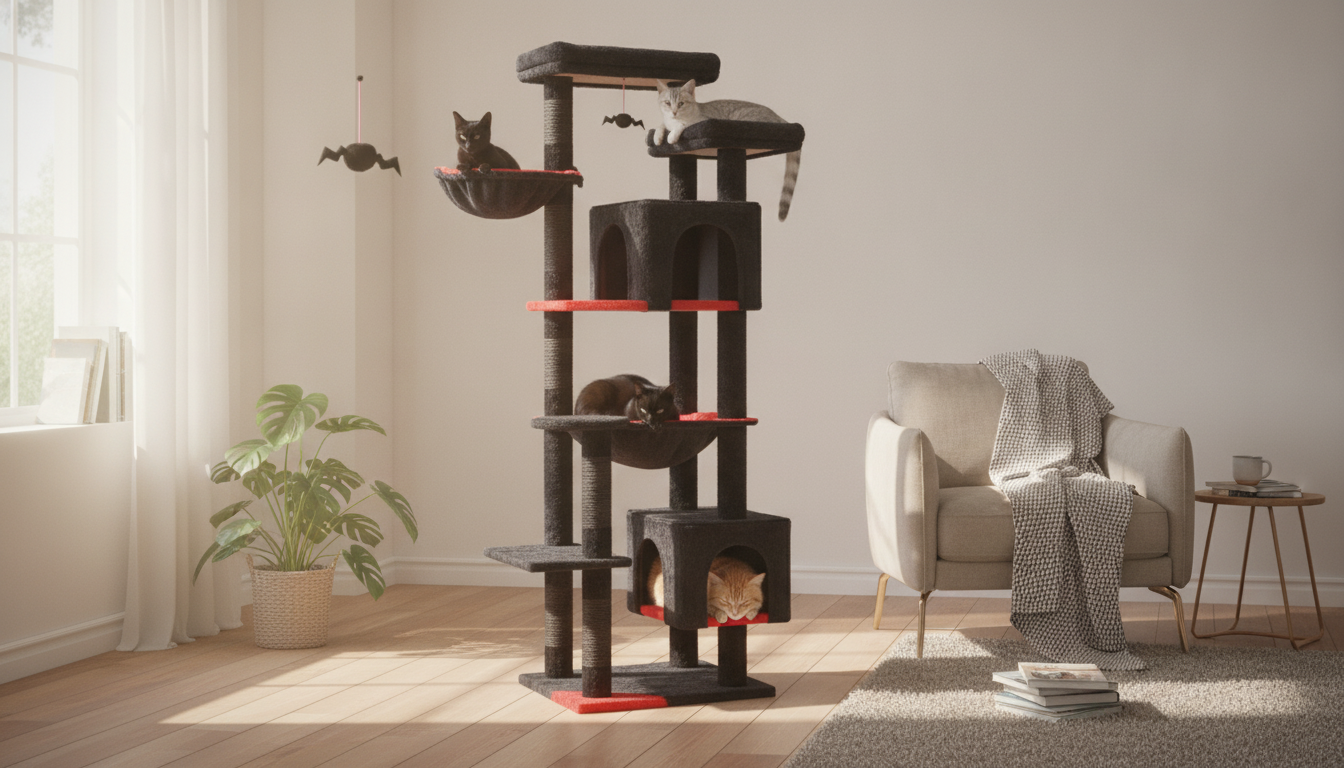
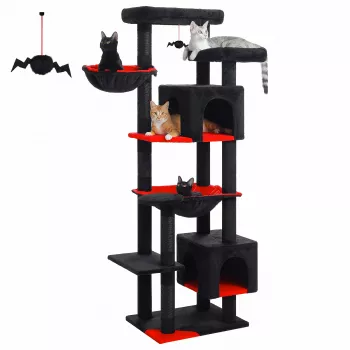
If you want a single piece that combines climbing levels, an enclosed hideaway, and a hammock lounge, consider the Tall Cat Tree for Large Indoor Cats – Multi-Level Cat Tower with Hammock & Condo.
FAQ
How to make a cat tree for a large cat?
Start with a wider, heavier base and larger platforms, then use thicker posts (and strong fasteners) to prevent wobble under load. Choose durable scratch wrap like heavy-duty sisal, reinforce the hammock with strong attachment points, and consider wall anchoring; always load-test stability before letting your cat climb high.
Are wooden cat trees better for large cats?
They can be, because solid wood or quality plywood often adds weight and stiffness, but design matters most: base width, post thickness, and sturdy hardware are what prevent tipping and wobble. Wooden builds may cost more and be harder to move, so balance sturdiness with practicality for your space.
Recommended for you












Leave a comment